Saving for a down payment is usually the single biggest hurdle standing between you and homeownership — bigger than your credit score, bigger than choosing the “right” mortgage, and bigger than finding the perfect house. If you’ve ever looked at home prices in your area and felt a small wave of panic wash over you, you’re not alone. Almost every homeowner you know went through the exact same stage of staring at a savings goal that felt impossibly far away.
The good news? Saving for a down payment isn’t about having a huge salary or getting lucky. It’s about having a clear number, a realistic timeline, and a system that runs quietly in the background of your life so you’re not relying on willpower alone.
In this guide, we’ll break down exactly how much you actually need to save, the fastest realistic ways to get there, down payment assistance programs most people don’t know exist, and the mistakes that quietly derail people’s savings plans. If you haven’t already, it’s worth reading our First-Time Homebuyer Guide first — it lays out the entire home-buying journey, and this article zooms into just one critical piece of it.
What Counts as a Down Payment, Exactly?
A down payment is the upfront cash you pay toward the purchase price of a home, with the rest covered by your mortgage loan. It’s expressed as a percentage of the home’s price — for example, a $50,000 down payment on a $250,000 home is 20%.
Quick Facts About Down Payments
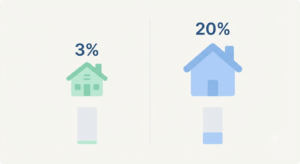
- Down payments typically range from 3% to 20% of the home’s purchase price, depending on the loan type.
- Putting down less than 20% on a conventional loan usually means paying private mortgage insurance (PMI) until you build enough equity.
- Some loan programs — like FHA loans — allow down payments as low as 3.5%, and VA and USDA loans can allow 0% down for eligible buyers.
- Your down payment size directly affects your monthly mortgage payment, so it connects closely with the math we covered in How Much House Can You Afford?
Why the Down Payment Matters So Much
It’s tempting to think of the down payment as just “the entry fee” for buying a house, but it actually shapes almost every part of your mortgage experience.
A bigger down payment means:
- Lower monthly payments
- Less interest paid over the life of the loan
- No (or lower) private mortgage insurance
- Better chances of loan approval and competitive interest rates
- More equity from day one, which protects you if home values dip
A smaller down payment means:
- Faster path to homeownership
- More cash kept in your emergency fund
- Higher monthly payments and added insurance costs
- Slightly higher interest rates in some cases
This is exactly why your down payment strategy should never be separated from your emergency fund strategy. If you drain every dollar you have to hit 20% down, you could end up house-rich and cash-poor — dangerous the moment a real repair bill or job disruption hits. We go deep into protecting yourself from that exact scenario in How to Build an Emergency Fund From Zero.
How Much Do You Actually Need to Save?
Let’s make this concrete. Say you’re eyeing a $300,000 home.
| Down Payment % | Amount Needed | Loan Type Example |
|---|---|---|
| 3% | $9,000 | Conventional (first-time buyer program) |
| 3.5% | $10,500 | FHA Loan |
| 10% | $30,000 | Conventional |
| 20% | $60,000 | Conventional (avoids PMI) |
But here’s what most guides leave out: your down payment isn’t the only cash you need on closing day. You’ll also need money for closing costs (typically 2–5% of the loan amount) and a cash cushion left over after closing. We cover this in detail in Hidden Costs of Buying a Home, but for now, just know your real savings target is usually your down payment amount plus another 3–4% of the home price.
So for that $300,000 home with 10% down, you’re really targeting closer to $39,000–$42,000 total, not just $30,000.
Step-by-Step: How to Actually Save for a Down Payment
This is the part that matters most. A goal without a system is just a wish. Here’s the system.
Step 1: Set a Specific, Realistic Number
Vague goals like “save as much as I can” rarely work. Pick a target home price range based on your area and desired loan type, then calculate your specific down payment number using the table above. Write it down. Put it somewhere you’ll see it — a sticky note on your laptop, a lock screen wallpaper, whatever works.
Step 2: Choose a Timeline
Decide if you’re buying in 1 year, 2 years, or 3+ years. This single decision changes your entire strategy:
- Under 2 years away? Keep your down payment savings in a high-yield savings account. You cannot afford to risk this money in the stock market where it could drop 15% right before you need it.
- 3+ years away? You have a bit more flexibility, but most financial planners still recommend keeping home-purchase savings out of volatile investments, since a market downturn at the wrong time could set you back years.
Step 3: Open a Dedicated Down Payment Savings Account
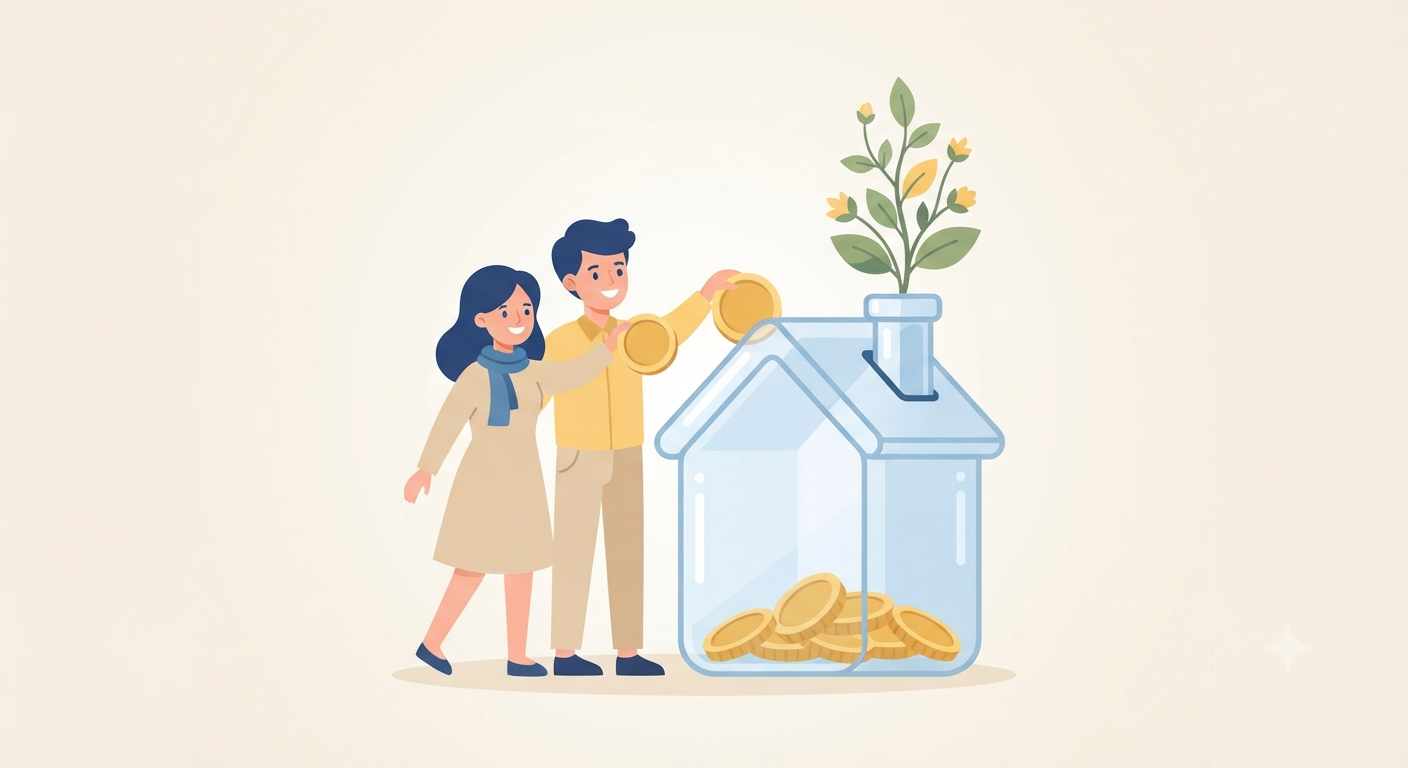
Never mix your down payment savings with your everyday checking account. Open a separate high-yield savings account specifically labeled “House Fund.” This does two things psychologically: it makes the money feel “off-limits” for everyday spending, and it gives you a satisfying visual of progress separate from your regular balance fluctuations. For help picking the right account type, see our comparison in Checking vs Savings Account: Which Do You Actually Need?
Step 4: Automate Your Contributions
This is the single highest-leverage step in this entire guide. Set up an automatic transfer from your checking account to your house fund every payday — even if it’s small at first. Automation removes the willpower requirement entirely; you save consistently whether you “feel like it” or not. We walk through exactly how to set this up in How to Automate Your Savings the Smart Way.
A simple example: If you need $30,000 in 3 years, that breaks down to:
- $10,000/year
- $833/month
- $192/week
Seeing the weekly number often feels far more achievable than the lump sum.
Step 5: Apply the 50/30/20 Rule — With a Twist
If you’re not already budgeting with a framework, start with the 50/30/20 rule (50% needs, 30% wants, 20% savings/debt) and redirect your “wants” category temporarily toward your house fund. Full breakdown here: 50/30/20 Budget Rule Explained With Examples.
Step 6: Cut Strategically, Not Randomly
Rather than trying to cut every expense at once (which usually fails within a month), pick your three biggest discretionary expenses and cut them by half for the duration of your savings sprint. This could be dining out, subscriptions, or impulse shopping. For a full list of realistic cuts, see 15 Practical Ways to Save Money Every Month.
Step 7: Add “Boost” Income When Possible
Tax refunds, work bonuses, side gig income, and cash gifts should go directly into your house fund rather than your everyday spending account. These lump-sum boosts can shave months off your timeline.
Step 8: Track Progress Monthly
Check your house fund balance once a month, not daily. Daily checking creates anxiety and tempts impulsive transfers out of the account during slow months. Monthly check-ins keep you motivated without becoming obsessive.

Down Payment Assistance Programs Most Buyers Don’t Know About
You may not have to save the entire amount alone. Many first-time buyers qualify for assistance that can significantly shrink the number you need to hit.
- State and local first-time homebuyer programs — many U.S. states offer grants or low-interest second loans specifically for down payments.
- FHA loans — allow down payments as low as 3.5% with more flexible credit requirements.
- VA loans — available to eligible veterans and active service members, often requiring 0% down.
- USDA loans — designed for eligible rural and suburban properties, sometimes with 0% down.
- Employer assistance programs — some employers now offer down payment matching as a benefit.
- Gift funds from family — many loan programs allow all or part of your down payment to come from a documented gift.
Before assuming you need the full 20%, research what you qualify for. Combining a smaller required down payment with a solid emergency fund is often smarter than draining every account to hit an arbitrary 20% target.
Common Mistakes That Slow Down Your Savings
Mistake 1: Treating the Down Payment Fund Like a Backup Emergency Fund
If you dip into your house fund every time a surprise expense pops up, you’ll never hit your goal. Keep these two funds completely separate. If you don’t have a real emergency fund yet, build that first — see How to Build an Emergency Fund From Zero.
Mistake 2: Investing Short-Term Savings in the Stock Market
Chasing higher returns by putting your house fund into stocks feels smart until the market drops 20% the year you planned to buy. Keep this money safe and liquid.
Mistake 3: Ignoring Closing Costs and Cash Reserves
Saving exactly your down payment amount and nothing more is one of the most common — and costly — planning errors. Revisit Hidden Costs of Buying a Home before finalizing your savings target.
Mistake 4: Not Automating the Process
Manual “I’ll transfer money when I remember” saving fails more often than it succeeds. Automation is non-negotiable if you’re serious about your timeline.
Mistake 5: Waiting for a “Big Enough” Income Jump Before Starting
Many people delay starting because they’re waiting for a raise or bonus. Start with whatever amount you can automate today — even $50/week — and increase it as your income grows.
Down Payment Savings Timeline: A Realistic Example
Let’s say Sarah wants to buy a $280,000 home with 10% down ($28,000), plus $8,000 for closing costs and reserves — a $36,000 total goal.
| Month | Action | Running Total |
|---|---|---|
| 1–3 | Opens dedicated savings account, automates $700/month | $2,100 |
| 4–6 | Cuts dining out + one subscription, boosts to $900/month | $4,800 |
| 7 | Tax refund of $2,200 added | $7,000 |
| 8–18 | Consistent $900/month automated saving | $17,000 |
| 19 | Work bonus of $1,500 added | $18,500 |
| 20–36 | Continues $900/month | $32,900 |
| 36 | Small raise increases contribution to $1,000/month for last few months | $36,000+ |
In three years, Sarah hit her goal — not through one dramatic sacrifice, but through consistent automation and a few smart boosts along the way.
Frequently Asked Questions
Q: How long does it typically take to save for a down payment? Most first-time buyers take between 2 and 5 years to save a full down payment, depending on income, target home price, and savings rate.
Q: Should I pay off debt or save for a down payment first? High-interest debt (like credit cards) should generally be tackled first, since it costs you more than your savings will earn. Compare strategies in How to Pay Off Debt Fast Using the Snowball Method.
Q: Is it better to save for 20% down or buy sooner with less? It depends on your market and goals. Buying sooner with less down gets you into homeownership faster (and away from rising rent), but means paying PMI and higher payments. Run your numbers using our guide on How Much House Can You Afford?
Q: Can I use retirement accounts for a down payment? Some retirement accounts allow limited penalty-free withdrawals for first-time home purchases, but this should be a last resort — always check current IRS rules and consult a tax professional first.
Q: What’s the best type of account for down payment savings? A high-yield savings account is ideal — it’s safe, liquid, and earns meaningfully more interest than a standard checking or basic savings account. See Checking vs Savings Account: Which Do You Actually Need?
Q: Do I need a full 20% down payment to buy a house? No. Many loan programs allow down payments as low as 3–3.5%, though a smaller down payment usually means paying private mortgage insurance until you build enough equity.
Final Thoughts: It’s a System, Not a Sprint
Saving for a down payment can feel like the hardest part of the homebuying journey, but it’s also the most controllable. Unlike interest rates or the housing market, your savings rate is almost entirely in your hands. Pick your number, automate your contributions, protect your emergency fund, and let consistency do the heavy lifting.
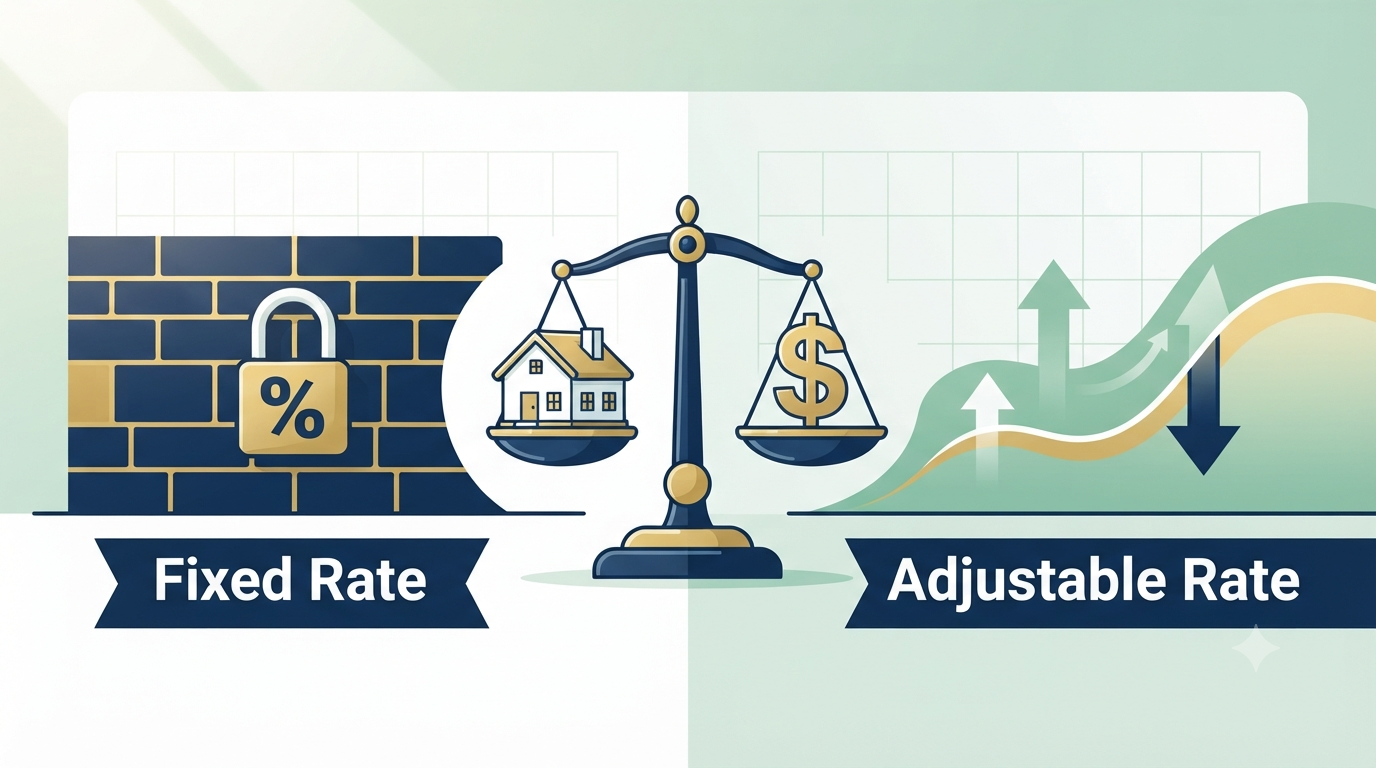
Once your down payment fund is on track, the next logical steps are understanding Fixed vs Adjustable Rate Mortgages and reviewing the Hidden Costs of Buying a Home so there are no surprises on closing day.
This article is for educational purposes only and does not constitute financial or mortgage advice. Please consult a licensed mortgage professional or financial advisor for guidance specific to your situation.