If the 50/30/20 rule feels too loose for you — if you’re the kind of person who wants to know exactly where every dollar is going, not roughly where it’s going — zero-based budgeting is probably the method you’ve been looking for.
The name sounds more intimidating than the concept actually is. Zero-based budgeting simply means that every dollar of income gets assigned a specific job before the month begins, so that income minus all your planned spending, saving, and debt payments equals zero. Not zero because you spent it all carelessly — zero because nothing is left unaccounted for, sitting around waiting to be spent on something you won’t remember by the time the credit card statement arrives.
This guide walks through exactly how the method works, how it’s different from other approaches, a full real-number example, and how to set one up yourself this month.
(This article is part of our Complete Beginner’s Guide to Budgeting and Saving Money — if you haven’t read the full guide yet, start there for the bigger picture before diving into the details below.)
What Is Zero-Based Budgeting?
Zero-based budgeting is a system where you assign every dollar of your income to a category — bills, groceries, savings, debt payoff, entertainment, everything — before the month starts, until the total allocated equals your total income exactly.
Income − (Expenses + Savings + Debt Payments) = $0
That doesn’t mean you spend everything you earn. “Zero” refers to unassigned dollars, not unspent ones. If you allocate $400 to savings, that $400 is “used” — it has a job, it’s just that its job is to sit in a savings account, not to be spent on something else. The whole point is that nothing is left floating around without a purpose, because unassigned money is exactly the kind of money that quietly disappears by the end of the month.
This is genuinely different from simply tracking spending after the fact. Zero-based budgeting is planning ahead, not reviewing behind — you decide where the money goes before you have the chance to spend it impulsively.
How Zero-Based Budgeting Differs From Other Methods
The clearest way to understand zero-based budgeting is to compare it to the more common alternatives.
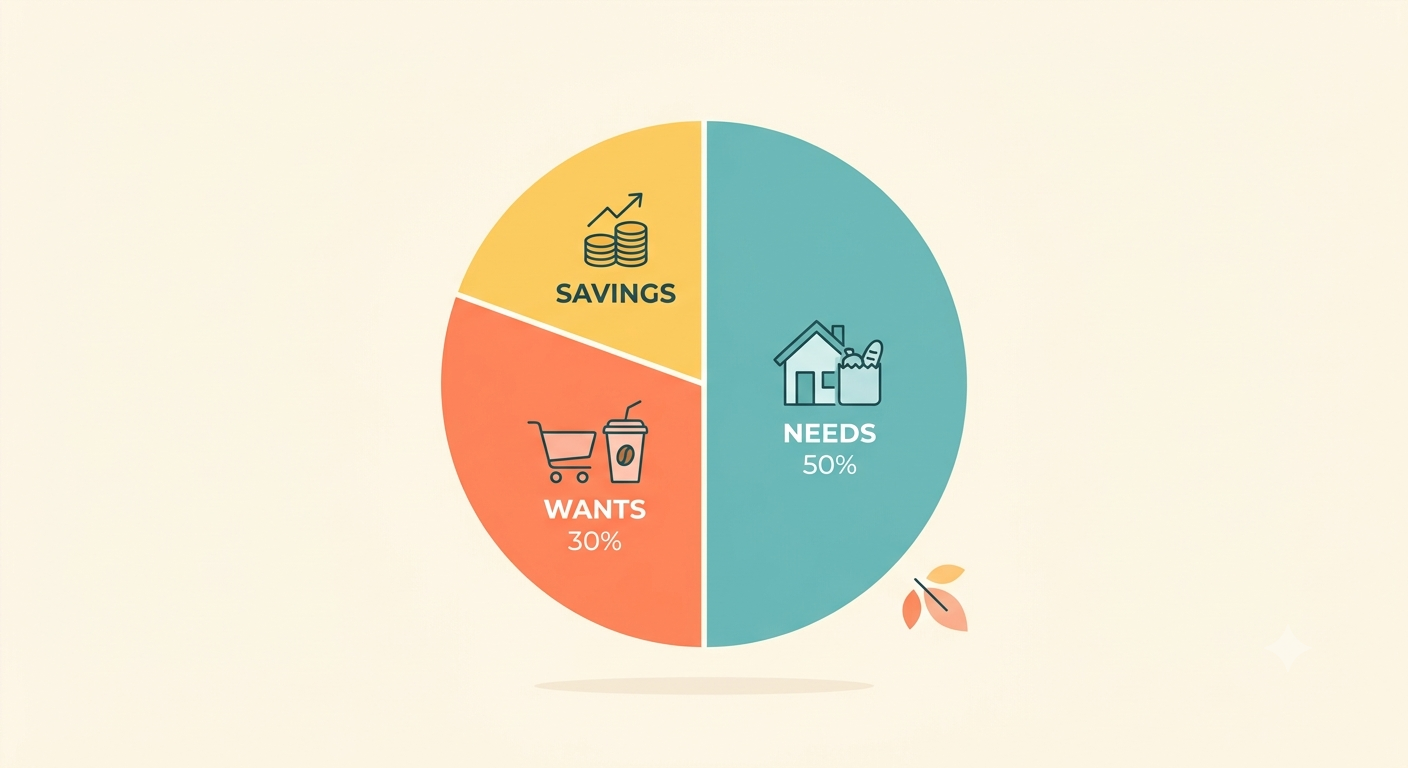
The 50/30/20 rule groups spending into three broad percentage-based buckets — needs, wants, savings — without requiring you to track individual categories closely. It’s simpler to start with but less precise. (See our full 50/30/20 budget rule guide for the details.)
Pay-yourself-first budgeting automatically sets aside savings and debt payments the moment income arrives, then lets you spend the rest freely without close tracking. It’s the lowest-effort method but offers the least visibility into where your money actually goes.
Zero-based budgeting sits at the opposite end from pay-yourself-first: maximum detail, maximum control, and — as a trade-off — more setup time each month. Every category gets a specific dollar amount, not a rough percentage or a leftover amount.
None of these is universally “better.” If you’ve tried simpler methods and kept ending up with money you can’t account for by month’s end, zero-based budgeting is usually the fix, because it removes the possibility of unassigned dollars entirely. If detailed tracking feels exhausting rather than satisfying, you may be better suited to a looser method — our guide comparing the best budgeting methods can help you figure out which fits your personality.
Step-by-Step: How to Set Up a Zero-Based Budget
Step 1: List Your Total Monthly Income
Start with your after-tax, take-home income — the amount that actually lands in your account. If your income varies month to month, use your lowest realistic month as your baseline rather than an average or best-case number, so your plan doesn’t rely on income that might not show up. (Our guide on budgeting on irregular income goes deeper on this if it applies to you.)
Step 2: List Every Expense You Can Think Of
This is the step that takes the most effort, and it’s worth doing thoroughly the first time. Go through your last full month of bank and card statements and list every recurring or predictable expense: rent, utilities, groceries, minimum debt payments, subscriptions, transportation, insurance. Don’t forget the small recurring ones — they add up fast and are easy to miss from memory alone.
Step 3: Assign Every Dollar a Job, Starting With Fixed Costs
Begin with expenses that don’t change: rent or mortgage, insurance premiums, loan minimums. These get their full amount assigned first, since they’re non-negotiable.
Step 4: Assign Variable but Predictable Costs
Next, allocate categories that fluctuate somewhat but happen every month — groceries, gas, utility bills that shift seasonally. Use your tracked history from Step 2 as a guide rather than guessing.
Step 5: Build In Irregular Expenses
Annual or occasional costs — car registration, holiday gifts, an annual software subscription — don’t fit neatly into a single month, but they’re entirely predictable if you plan ahead. Divide the yearly total by 12 and assign that monthly amount to a dedicated category, even in months where you don’t spend it. This is essentially a sinking fund, and it’s one of the most underused tricks in budgeting. (Full details in our guide on sinking funds.)
Step 6: Assign Savings and Debt Payoff Before Flexible Spending
This is the step that separates zero-based budgeting from simply spending until the money runs out. Decide how much goes to savings and extra debt payments before you allocate anything to flexible spending like dining out or entertainment. Treat it exactly like a bill — non-negotiable, assigned early, not left as an afterthought.
Step 7: Assign What’s Left to Flexible Spending
Whatever remains after fixed costs, variable costs, irregular expenses, and savings goes toward flexible spending — the category where you have the most day-to-day control. If this number comes out lower than you’d like, that’s useful information: it tells you exactly which earlier category needs to shrink, rather than leaving you to wonder where the money went at month’s end.
Step 8: Confirm the Math Equals Zero
Add everything up. Income minus every category assigned should land at exactly zero. If it doesn’t, adjust — either a category needs trimming, or you’ve found extra income to assign somewhere useful.

A Full Zero-Based Budget Example
Here’s how this looks with real numbers, using a take-home income of $4,200 a month.
| Category | Amount |
|---|---|
| Rent | $1,300 |
| Utilities | $180 |
| Groceries | $450 |
| Transportation (gas + insurance) | $220 |
| Minimum debt payments | $300 |
| Sinking fund (irregular expenses ÷ 12) | $150 |
| Savings | $500 |
| Extra debt payoff | $300 |
| Subscriptions | $60 |
| Flexible spending (dining out, entertainment, misc.) | $740 |
| Total | $4,200 |
Every dollar has a destination. Notice that savings and extra debt payoff were assigned before flexible spending was calculated — that ordering is what makes zero-based budgeting effective. Flexible spending isn’t ignored; it’s simply what’s left once the priorities that actually move your finances forward are locked in first.
Tools to Use for Zero-Based Budgeting
You don’t need specialized software to do this — a spreadsheet with simple addition formulas works perfectly well, and plenty of people stick with one for years. That said, dedicated budgeting apps built specifically around the zero-based method can save time by auto-categorizing transactions and flagging when a category runs low. If manual entry feels like too much friction, our roundup of the best free budgeting apps covers several options worth comparing, including ones designed specifically for this approach.
Whichever tool you choose, the method matters more than the platform. A basic spreadsheet used consistently will outperform a sophisticated app that gets abandoned after two weeks.

Pros of Zero-Based Budgeting
Nothing gets lost or forgotten. Because every dollar is assigned a purpose, there’s no mystery gap between what you earned and what you can account for.
It forces intentional decisions. Rather than spending on autopilot and hoping savings happens with whatever’s left, you decide in advance exactly how much goes where.
It adapts naturally to changing circumstances. If your income drops or an expense increases one month, the zero-based structure makes it immediately obvious which category needs to shrink to keep the math balanced — you’re not left guessing.
It builds real financial awareness over time. After a few months of assigning every dollar deliberately, most people develop a much clearer sense of their actual spending patterns than they had before.
Cons of Zero-Based Budgeting
It takes more time upfront than simpler methods. Building a detailed category list and reassigning dollars each month requires more effort than a rough percentage split.
It can feel restrictive if categories are too narrow. If you create twenty micro-categories instead of a reasonable handful, the system becomes fragile — one unexpected expense in a too-narrow category and the whole plan feels broken. Keep categories broad enough to bend without snapping.
Irregular income makes it more complex. If your income changes significantly month to month, you’ll need to rebuild parts of the budget more often, which can feel like extra work compared to a simpler percentage-based approach. (Again, our guide on budgeting on irregular income has strategies specifically for this.)
It requires monthly maintenance, not a one-time setup. Zero-based budgeting isn’t a “build it once” system — it needs a fresh pass each month as income and expenses shift, which is more upkeep than some other methods require.

Who Zero-Based Budgeting Works Best For
This method tends to work particularly well if you:
- Like having detailed visibility into exactly where your money goes
- Have felt frustrated in the past by budgets that left money “unaccounted for”
- Are working toward a specific, aggressive goal — paying off debt fast, saving for a house down payment, building wealth on a tight timeline
- Don’t mind spending 20–30 minutes at the start of each month planning ahead
It tends to work less well if you find detailed tracking draining rather than clarifying, or if your schedule genuinely doesn’t allow for the monthly setup time it requires. In that case, a looser method like the 50/30/20 rule or pay-yourself-first budgeting may get you 80% of the benefit with a fraction of the effort. There’s no prize for using the most demanding system if it’s one you won’t actually keep using.
Frequently Asked Questions
Does zero-based budgeting mean I have to spend all my money? No. “Zero” refers to every dollar being assigned a job, not every dollar being spent on purchases. Money allocated to savings or debt payoff still counts as “assigned,” even though it isn’t spent on day-to-day items.
How is this different from just tracking my expenses? Tracking records where money went after you’ve already spent it. Zero-based budgeting decides where money will go before you spend it, which is a meaningfully different — and more proactive — approach.
What happens if I overspend in one category? You adjust another category to cover it, ideally before the month ends rather than after. This is one of the strengths of the method: an overspend in one area is immediately visible as a shortfall somewhere else, rather than a vague sense that “money is tight” with no clear cause.
Do I need a special app for zero-based budgeting? No — a simple spreadsheet works fine, especially when you’re starting out. Dedicated apps can add convenience through automatic transaction syncing, but they’re not required to use this method effectively.
How long does it take to set up each month? The first month typically takes the longest, often 30–60 minutes, since you’re building categories from scratch. After that, most people can update and reassign their zero-based budget in 15–20 minutes once the categories are established and only the amounts need adjusting.
Key Takeaways
- Zero-based budgeting assigns every dollar of income a specific job so that income minus all allocations equals zero
- It offers more precision and control than percentage-based methods like the 50/30/20 rule, at the cost of more monthly setup time
- Assign fixed costs first, then variable costs, then irregular expenses, then savings and debt payoff — flexible spending comes last
- Keep categories broad enough to bend without breaking; too many narrow categories makes the system fragile
- It works best for people who want detailed visibility and are pursuing a specific financial goal on a timeline
If this level of detail feels like more than you need right now, our 50/30/20 budget rule guide offers a simpler starting point. And if you want to see how zero-based budgeting stacks up against every other major method side by side, our comparison of the best budgeting methods breaks it all down in one place.
This article is for informational purposes only and is not financial advice.