

Most people assume the balance on their credit card statement, medical bill, or personal loan is fixed — a number you either pay in full or fall behind on. It isn’t. Creditors negotiate every single day. They’d rather collect 60% of what you owe than 0% of it, and that simple math is the leverage you’re going to use.
This guide walks through exactly how to negotiate with creditors: what to say, when to call, which accounts are worth negotiating, and what actually happens to your credit afterward. If you’re working through your complete debt payoff roadmap, negotiation is often the fastest single step you can take — sometimes cutting your monthly payment or total balance within one phone call.
This article is for educational purposes and isn’t personalized financial or legal advice. For serious or complex debt situations, consider speaking with a nonprofit credit counselor or attorney.
Why Creditors Are Often Willing to Negotiate
Creditors negotiate because the alternative — you defaulting completely — costs them more than a discount does.
Here’s the math from their side:
- Every account that goes to collections or charge-off costs the creditor money to pursue, sell, or write off.
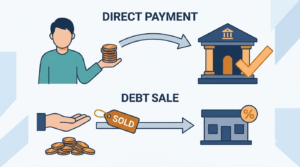
- A charged-off debt is often sold to a collection agency for pennies on the dollar — sometimes 4 to 10 cents per dollar owed.
- If a creditor can get you to agree to pay even 50 to 70 cents per dollar directly, that’s a far better outcome for them than selling your debt for scraps.
This is why credit card companies have entire departments — usually called “hardship” or “retention” departments — whose job is to keep you paying something rather than nothing. Understanding this shifts the entire conversation. You’re not asking for a favor. You’re offering a deal that benefits both sides.
Which Debts Are Worth Negotiating
Not every account negotiates the same way. Here’s a quick overview before you pick up the phone.
| Debt Type | Negotiable? | Typical Leverage |
|---|---|---|
| Credit cards | Yes — very negotiable | Hardship programs, lower APR, settlement |
| Medical bills | Yes — highly negotiable | Cash-pay discounts, payment plans, charity care |
| Personal loans | Sometimes | Depends on lender; see Personal Loans Explained |
| Federal student loans | Different process | Use official repayment plans — see Student Loan Repayment Options |
| Collections accounts | Yes — very negotiable | Pay-for-delete requests, lump-sum settlements |
| Auto loans | Limited | Lender may offer deferment, rarely reduces principal |
| Mortgages | Limited, formal process | Loan modification through the servicer, not informal negotiation |
Credit cards, medical debt, and collection accounts are where negotiation works best and fastest. This guide focuses mainly on those.
Before You Call: How to Prepare
Walking into a negotiation unprepared is the single biggest reason people accept a worse deal than they could have gotten. Spend 20 minutes on this first.
1. Know your numbers
Write down, for each account:
- Current balance
- Interest rate (APR)
- Minimum payment
- How many months you’ve been current or behind
- What you can realistically afford to pay monthly, or as a lump sum
2. Decide your goal before you dial
There are three different things you can ask for, and they are not the same conversation:
- A lower interest rate — best if you’re current on payments and just want the balance to shrink faster.
- A hardship plan — best if you’re struggling to make minimum payments but want to keep the account in decent standing.
- A settlement for less than you owe — best if the account is already late or you’re prepared to pay a lump sum to close it out.
3. Have a number ready
If you’re settling debt, decide your maximum offer before you call. A common starting point is offering 30–40% of the balance, expecting to land somewhere between 50–70%. Creditors almost never accept a first offer, so anchor low.
4. Get everything in writing later
Never rely on a verbal agreement. More on this in the mistakes section below.
Step-by-Step: How to Negotiate With Credit Card Companies
Step 1: Call the right department
Ask specifically for the hardship department or retention department, not general customer service. Front-line reps usually can’t approve anything beyond a due-date change.
Step 2: State your situation briefly and honestly
You don’t need a sob story — a short, factual explanation works better than an emotional one.
Script you can use:
“Hi, I’m calling about my account ending in [last 4 digits]. I’ve had a change in my financial situation and I’m having trouble keeping up with the current payment and interest rate. I want to stay current on this account, but I need to find a payment that works. What options do you have for lowering my rate or adjusting my payment?”
Step 3: Ask for the specific outcome you decided on earlier
If you want a lower rate:
“Is there any way to reduce my APR? I’ve been a customer for [X years] and have a good payment history.”
If you want a hardship plan:
“Do you have a hardship program that temporarily lowers my payment or interest rate for a set period?”
If you’re negotiating a settlement (usually only after you’re behind):
“I’m not able to pay the full balance, but I can offer a one-time payment of [your number] to settle this account. Can we close this out at that amount?”
Step 4: Let there be silence
After you make an offer, stop talking. Representatives are trained to fill silence, and often the next thing they say is a counteroffer in your favor.
Step 5: Get the agreement in writing before paying anything
Ask for the terms to be emailed or mailed to you. Do not send a payment based on a verbal promise alone.
How to Negotiate a Lower Interest Rate
This is the easiest negotiation and the one most people skip. If you’re current on payments, this alone can save hundreds of dollars a year.
What helps your case:
- On-time payment history for 6+ months
- A long relationship with the card issuer
- A competing offer from another card (even if you don’t plan to switch)
What to say:
“I’ve noticed other cards offering lower rates, and I’d like to stay with you, but I need a more competitive APR. Can you match or come close to that?”
Card issuers can often shave 3–8 percentage points off your rate for loyal, current customers — no hardship required.
How to Negotiate a Debt Settlement (Pay Less Than You Owe)
Settlement is different from a hardship plan: you’re offering to pay a reduced lump sum to close the account permanently, usually only realistic once an account is 60–180 days past due (creditors are far more flexible once an account is already delinquent).
Typical settlement ranges
| Account Status | Typical Settlement (% of balance) |
|---|---|
| Current, no missed payments | Rarely settles — try rate reduction instead |
| 30–90 days late | 60–80% |
| 90–180 days late | 40–60% |
| Charged off / sent to collections | 20–50% |
Settlement negotiation script
“I’d like to resolve this account. I can pay [X]% of the balance as a single payment this week if we can agree to close the account as settled in full. Can you send that agreement in writing before I send payment?”
Always request the phrase “paid as agreed” or “settled in full” on the written confirmation, and clarify how it will be reported to the credit bureaus.
Negotiating Medical Debt
Medical debt plays by different rules and is often the most forgiving to negotiate.
- Ask for the cash-pay or self-pay rate — hospitals often bill insurance rates that are far higher than what they’ll accept from an uninsured or self-paying patient.
- Ask about financial assistance or charity care programs — many nonprofit hospitals are required to offer these, even to people who don’t think they’d qualify.
- Request an interest-free payment plan — most providers will spread a balance over 12–24 months with no added interest if you ask before the bill goes to collections.
Negotiating With Collection Agencies
Once a debt is sold to a collector, the dynamics shift — and so should your approach.
- Collection agencies often bought your debt for a fraction of its value, so their room to negotiate is usually larger than a bank’s.
- You can request a “pay-for-delete” agreement, where the agency removes the account from your credit report in exchange for payment. Not all agencies agree to this, and some credit bureaus discourage it, but it doesn’t hurt to ask, in writing.
- Know your rights: collectors cannot harass you, call outside of 8 a.m.–9 p.m., or misrepresent the amount owed. The CFPB and FTC both publish your legal protections under the Fair Debt Collection Practices Act.
Mistakes to Avoid When Negotiating Debt
- Giving bank account access for “verification.” Never authorize a direct withdrawal until you have a signed agreement.
- Making a partial payment before an agreement is finalized. This can restart the statute of limitations on old debt in some states.
- Accepting a verbal-only deal. Get everything in writing — email is fine, but get it before you pay.
- Negotiating out of order. Prioritize your highest-interest or most urgent accounts first — this pairs directly with your overall debt snowball or avalanche strategy.
- Assuming settlement is always best. A settled account often hurts your credit more short-term than a hardship plan that keeps the account “paid as agreed.”
What Happens to Your Credit Score After Negotiating
This is the part most guides skip, and it matters.
| Negotiation Type | Credit Impact |
|---|---|
| Lower interest rate | No negative impact — often neutral or slightly positive (lower utilization over time) |
| Hardship plan (current account) | Usually reported normally as “paid as agreed” |
| Settlement for less than owed | Reported as “settled” — this lowers your score somewhat and stays on your report up to 7 years |
| Pay-for-delete (successful) | Best-case outcome — account removed entirely |
A settlement will ding your score less than a full default or bankruptcy, but more than a hardship plan that keeps the account current. If your credit score is a top priority, try the interest rate or hardship route first before jumping to settlement,

When to Consider a Nonprofit Credit Counselor Instead
If you have multiple accounts, negotiating one by one can be overwhelming. A nonprofit credit counseling agency (look for ones accredited by the National Foundation for Credit Counseling) can set up a debt management plan that negotiates reduced interest rates across all your unsecured debts at once, usually for a small monthly fee. This is different from for-profit debt settlement companies, which often charge high fees and can do more harm than good — approach those with caution.
Frequently Asked Questions
Will negotiating with creditors hurt my credit score? It depends on the type of negotiation. A rate reduction or hardship plan on a current account typically doesn’t hurt your score. A settlement for less than the full balance will lower your score somewhat and be noted on your credit report.
How much can I realistically get a creditor to reduce my balance by? For accounts that are significantly past due or charged off, settlements of 40–60% of the balance are common. Current accounts are more likely to get a lower interest rate than a reduced balance.
Can I negotiate debt myself, or do I need a debt settlement company? You can absolutely negotiate on your own using the scripts above. Debt settlement companies charge substantial fees for something you can do yourself with a phone call and some preparation.
What if the creditor says no? Ask if you can call back, or try again in a few weeks — sometimes a different representative has more flexibility. You can also escalate to a supervisor politely.
Is it better to negotiate before or after missing a payment? For interest rate reductions, negotiate while current. For settlements, creditors are typically far more flexible once you’re 60+ days behind — though this isn’t a strategy to intentionally fall behind, since it also damages your credit.
Where to Go From Here
Negotiating your existing balances is one lever — pairing it with the right payoff strategy is what actually gets you out of debt. Head back to the complete debt payoff roadmap for the full picture, or dig into a specific next step: